
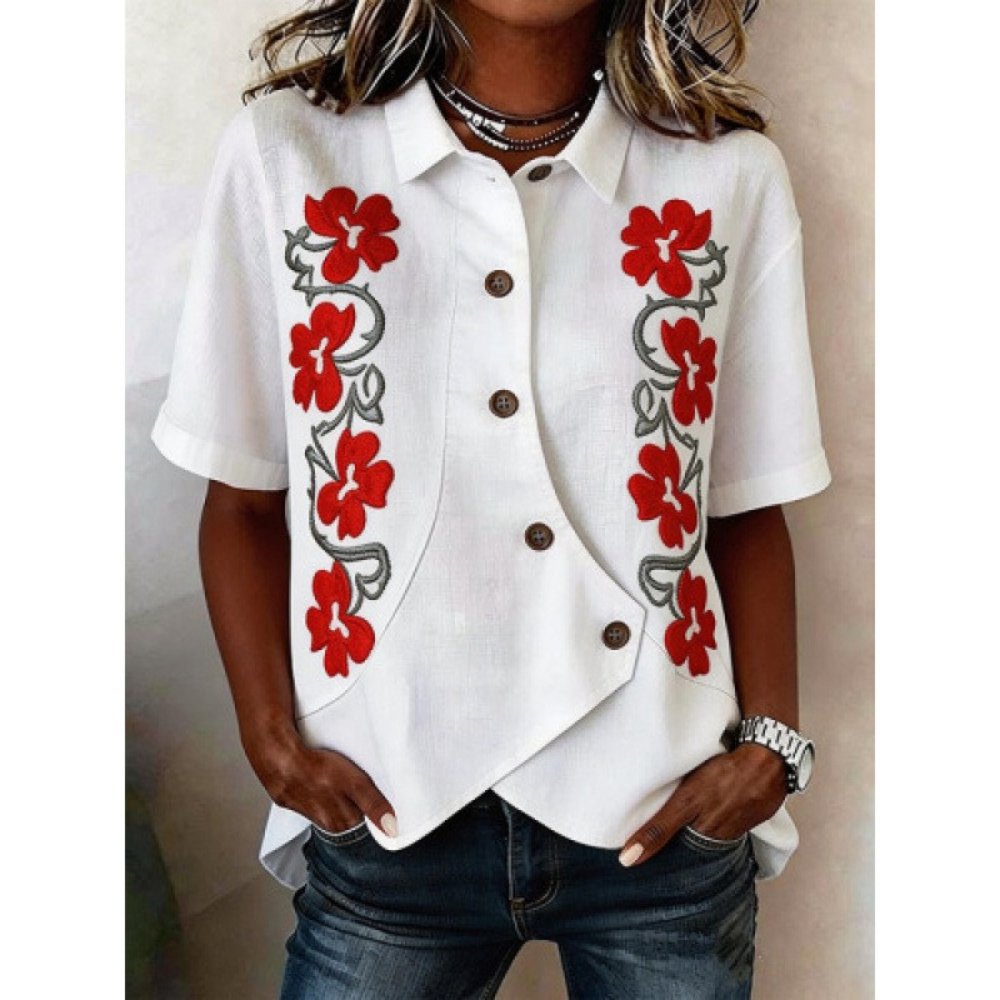
For an irregular-hem shirt RFQ, ask the supplier to mark the upper reference point and each relevant lower endpoint before returning length values. Identify the front, back and wearer-left or wearer-right references separately where the purchase needs them. Shunsheng Podwear’s model photograph shows an uneven-looking front outline, but pose and overlapping panels do not define a finished length chart. Connect every returned measurement to the offered garment, size and agreed presentation condition.
Identify the offered hem version and size
Send the exact irregular-hem shirt product link and ask the supplier to identify the sample and size being discussed. Keep those identifiers beside the returned views and figures. If another hem or garment version is offered, request a separate reference instead of applying the original outline description to the alternative automatically.
The official image shows a floral shirt worn on a model, with an uneven-looking lower front presentation. Use it to locate the product family and the areas needing clarification. Do not assume that every visible difference between the two sides is a confirmed cut or finished-garment dimension without a supplier explanation.
Agree the upper point used for the length
Ask the supplier where the length begins. A shoulder or neckline reference and another upper garment point can describe different paths. Request the relevant point to be marked on the offered sample view so the buyer knows what each returned value actually measures.
If the buyer already uses a particular measuring reference, describe it and ask whether the supplier can provide a matching value. Keep any different supplier method separately named until its relationship is clear. A column labelled length is not enough when the starting point has not been agreed.
Name each lower hem endpoint that matters
Identify which finished lower edge the buyer needs to compare. Depending on the offered design, the enquiry may concern an identified front corner, a centre reference, a longest visible point or another clearly marked endpoint. Ask the supplier which references apply to the actual garment rather than inventing a measurement map from the styled photograph.
Use a consistent viewing convention when left and right matter. Wearer-left and wearer-right labels help avoid confusion when a photograph is rotated or viewed from another direction. Keep the upper point and lower endpoint paired in the same measurement description so a returned figure cannot be copied into the wrong column.
Length reference | Buyer question | Supplier response requested
Upper starting point | Where does the measurement begin? | Marked garment reference
Front lower endpoint | Which finished edge does the value reach? | Identified front point and path
Left/right reference | Which wearer side does the comment concern? | Consistent side labels where relevant
Back reference | Is a separate back length required? | Back view and named endpoints if needed
Size and condition | Which offered version was represented? | Size code and measuring presentation
Separate the model presentation from the measuring condition
Ask for a view suitable for the size enquiry, with the garment arranged in the condition the supplier uses for its measurement. A model’s pose, hand position or panel overlap can change the visible outline. Request a marked finished-garment reference rather than attempting to recover dimensions from the proportions of the photograph.
If the front opening or overlap changes the reference, ask the supplier to state the agreed presentation condition. Keep that explanation beside the values. Do not invent a fastening arrangement, stretching force or handling procedure from the image; clarify the method actually used for the offered sample.
• Identify the garment version and size before comparing lengths.
• Mark an upper starting point and a named lower endpoint.
• Use wearer-side labels when the two sides need separate references.
• Record the presentation condition beside the returned measurement.
Keep a general overall length distinct from detailed references
If the supplier provides an overall length, ask which point it describes on the irregular outline. Keep it under that confirmed description instead of using it as every front, side and back reference. A buyer who needs only one overall value can still make that value useful by defining its endpoints clearly.
If more than one size is offered, request the relevant size codes with their own measurement references. Do not create a size progression or assume that a value applies across the entire range. The length map also does not independently verify fabric stretch, composition or wash performance; keep any required information on those subjects separate.
Send a marked hem-length enquiry
A practical request can read: For the linked irregular-hem shirt and offered size, please mark the upper starting point and the relevant finished hem endpoints used for your length values. Identify any separate front, back or wearer-side references and explain the garment condition used for measurement. Please keep an overall value separately described if it uses a different endpoint.
Return comments against the same marked view and ask the supplier to repeat the accepted reference identifiers. When the hem version, size or measuring condition changes, request updated information for the affected reference before carrying earlier figures forward. This gives the buyer a defined length decision without inventing dimensions, tolerances or a guaranteed fit result.
Frequently asked questions
Can the model photograph be used as a finished length chart?
Request a supplier-marked garment reference. Pose and overlapping panels do not establish measurement endpoints or numerical dimensions.
Is one overall length enough for every hem point?
Ask which endpoint that overall value describes and request additional references only where the purchase needs them.
Should left and right be identified from the viewer’s position?
Use a consistent convention, such as wearer-left and wearer-right, and ask the supplier to label the relevant views.
What if the offered size or hem version changes?
Request updated references for that version instead of assuming that the previous endpoints and values still apply.
Product and contact references
Product reference: https://sspodwear.com/product/2026-cross-border-new-stylish-printed-irregular-hem-women-s-shirt-top-direct-from-factory/
Related shirts and sets: https://sspodwear.com/products/
Contact Shunsheng Podwear: https://sspodwear.com/contact/
Shunsheng Podwear blog: https://sspodwear.com/blog/