
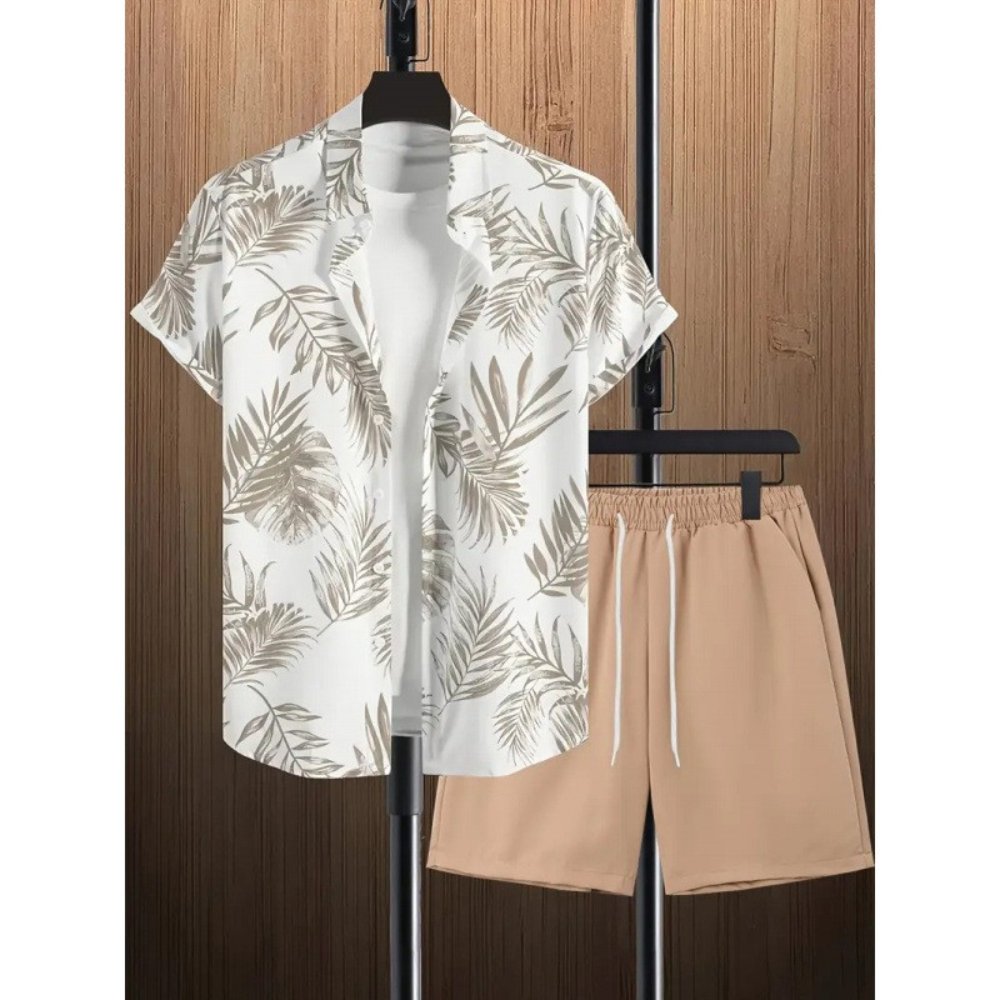
For a printed shirt-and-shorts set RFQ, list the proposed print status and design reference for each garment separately. Ask the supplier which shirt and shorts belong to the offer, then connect each component to its own artwork or plain-colour reference. Shunsheng Podwear’s catalogue image shows a patterned shirt with plain-looking shorts. That appearance should prompt a component-specific confirmation rather than an assumption that both pieces carry the same print.
Identify the garments that make up the offer
Send the exact shirt-set product link and ask the supplier to identify the two garments proposed together. Keep the shirt and shorts references beside the set identifier. If an alternative garment is returned, ask the supplier to label that change explicitly instead of combining views from different proposals into one approval record.
The official display helps identify the short-sleeve shirt and shorts presentation. It is still a catalogue reference, not an automatic inclusion list for everything visible around the garments. Ask for the actual supplied components and keep hangers, display supports or other presentation items outside the offer unless the supplier includes them expressly.
Record printed or plain appearance for each garment
Create one entry for the shirt and another for the shorts. Ask the supplier to identify the proposed appearance of each component, including whether it uses an artwork reference or a plain-colour reference. A set name containing printed does not tell the buyer how that description is distributed between the garments.
The selected source view shows a visible leaf-like pattern on the shirt and a plain-looking appearance on the shorts. Use that observation to ask about the actual offer. Do not turn a screen appearance into a confirmed production method or assume that hidden areas carry the same pattern without a supplier response.
Component reference | Buyer question | Supplier response requested
Shirt | Which print or plain version is offered? | Garment and appearance identifiers
Shorts | Which appearance belongs to the paired bottom? | Separate artwork or colour reference
Visible print areas | Which surfaces carry the proposed design? | Marked views for the relevant garment
Unseen surfaces | What appearance is proposed on the back or other area? | Additional view or explicit description
Set combination | Which two versions are paired together? | One confirmed component map for the offer
Keep artwork identity separate from the colour pairing
Ask the supplier to identify the actual artwork version for any printed component. If it uses design codes, keep those codes with the garment reference; if it uses sample photographs, keep the sample identifiers instead. A broad phrase such as tropical print may locate a family without specifying the design being offered.
For a plain-looking component, ask which colour reference belongs to the proposed set. Do not infer an exact shade from the displayed image or assume that every shirt design is supplied with the same shorts colour. Keep the two appearance references together so the buyer approves a defined pairing rather than two unrelated catalogue examples.
Identify the print areas that a front view cannot settle
Ask for additional views when the buyer needs to understand the proposed back, sleeve or other surface. Keep each view connected to the same garment identifier. A clear front display can help the buyer recognise a set while leaving the appearance of unseen areas undefined.
If the supplier returns a marked design reference, ask which garment surfaces its markings describe. Do not invent a repeat position, edge allowance or pattern-matching requirement from the photograph. State the actual appearance decision the buyer needs, then ask the supplier to confirm the proposed scope on the offered version.
• Identify the shirt and shorts versions separately.
• Record the print or plain-colour reference for each garment.
• Ask about relevant surfaces missing from the catalogue view.
• Confirm the paired appearance combination in one supplier reply.
Treat a requested design change as a separate proposal
If the buyer wants the shorts to carry a print, or wants a different shirt pattern, state that request explicitly. Ask whether the supplier can offer the proposed change and request its own component references. Do not treat a desired change as an available catalogue option before the supplier confirms it.
An appearance map also does not independently verify the fabric, printing process or colourfastness described in promotional text. Request any required material or performance information separately for the affected component. A matching look does not prove that the two garments use identical specifications or that a particular test result applies to both.
Send a component-specific print enquiry
A practical request can read: For the linked shirt-and-shorts set, please identify the offered shirt and shorts versions. State the print or plain-colour reference for each garment and show the relevant front and back appearances. Please keep any alternative artwork or component pairing separate from the catalogue combination in the response.
Ask the supplier to repeat the accepted set and component identifiers in its final reply. If either appearance version changes, update the affected part of the map before carrying an earlier approval forward. This gives the buyer a defined print-scope decision without inventing a garment inclusion, an artwork option or a verified production-performance claim.
Frequently asked questions
Does printed set mean both garments have the same artwork?
Ask the supplier to identify the print or plain appearance of the shirt and shorts separately.
Can the front photograph confirm the back design?
Request the relevant unseen view or an explicit appearance description tied to the same offered garment.
Are printed shorts automatically available as an alternative?
Treat that as a specific request and obtain supplier confirmation of the proposed component version.
Does a matching set appearance prove identical material specifications?
No. Keep the appearance pairing separate from any required component material or performance information.
Product and contact references
Product reference: https://sspodwear.com/product/2025-summer-new-european-amp-american-cross-border-printed-shirt-shorts-set-3d-print-resort-casual-men-s-two-piece-open-front-set/
Related shirts and sets: https://sspodwear.com/products/
Contact Shunsheng Podwear: https://sspodwear.com/contact/
Shunsheng Podwear blog: https://sspodwear.com/blog/